A single-storey rear extension solves the space problem. It often creates a light problem instead. With windows on only one or two walls, the middle of the room can feel dim by mid-afternoon. That’s true even in summer. A roof lantern or a flat skylight fixes that, but only when it’s specified and fitted properly.
Why Flat Roofs Lose Natural Light
Most kitchen-diner extensions gain a wall of bifold doors at one end and brick on the other three sides. That’s fine near the doors. The middle and back of the room, further from the glazing, stay noticeably darker.
A flat roof gives you an obvious answer that a pitched roof doesn’t: the whole surface is available for glazing. Rather than fighting for wall space, you bring light in from above, right where the room needs it most.
Roof Lanterns vs Flat Skylights
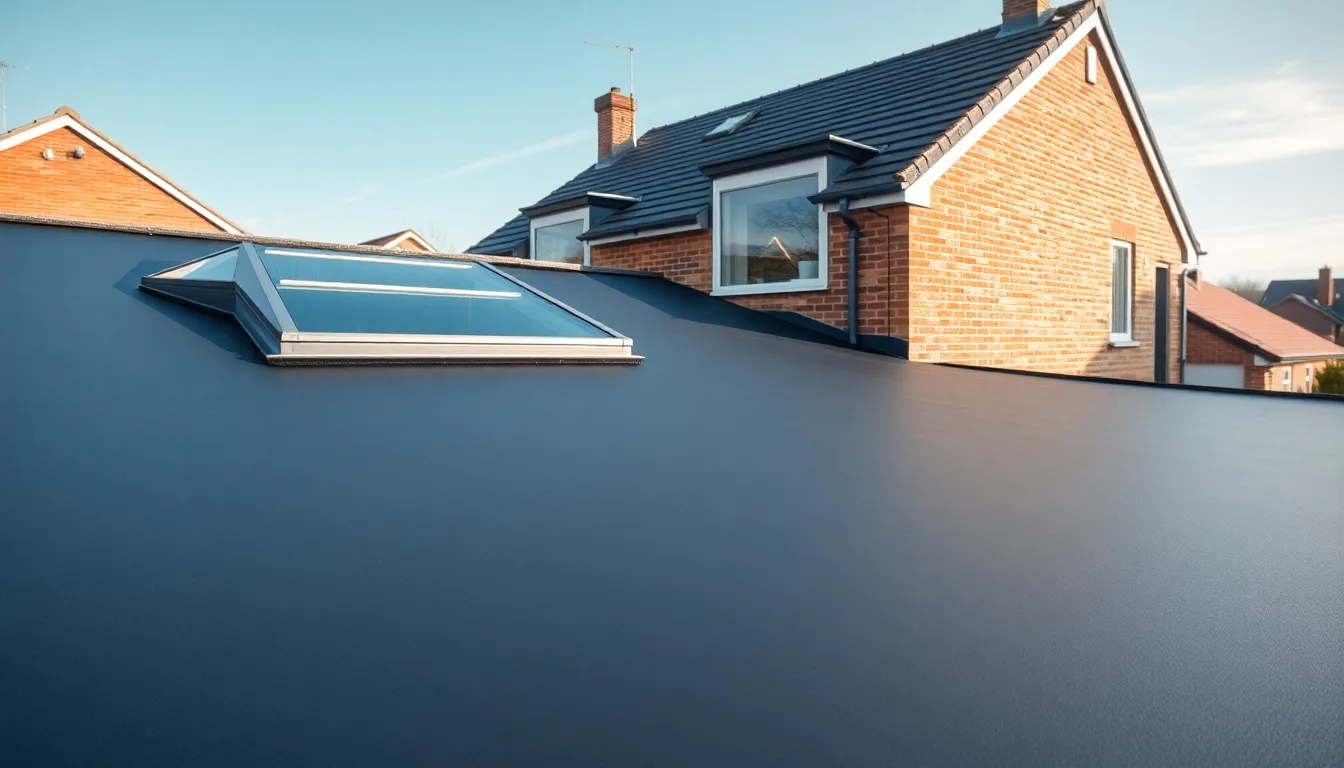
A roof lantern is a raised glazed box, usually with a shallow pitched or ridged top, sitting on an upstand above the roof deck. It lets in more light and looks more architectural. As a result, it tends to sit over a kitchen island or dining table as a feature.
A flat skylight sits flush, or nearly flush, with the roof covering. It’s simpler, cheaper, and does the job well over a hallway, bathroom or smaller extension where a feature isn’t the point. Neither is “better” — they suit different rooms and different budgets.
Getting the Size and Position Right
A lantern or skylight that’s too small barely changes the room. Too large, and you get glare, overheating in summer, and a heat-loss problem in winter. As a rough guide, rooflights sized around 15-20% of the floor area below tend to strike the right balance.
Position matters as much as size. Centre a lantern over the space it’s meant to light — an island, a dining table, a reading corner — rather than wherever happens to be structurally easiest. A good installer will work this out with you before anything’s ordered, not after.
Building Regulations You Can’t Skip
Glazed rooflights count toward the extension’s overall thermal performance under Building Regs Part L. Because of that, the glazing unit’s U-value has to stack up alongside the rest of the roof’s insulation. Triple glazing and warm-edge spacer bars are now standard on most quality lanterns for exactly this reason.
Most single-storey rear extensions fall under permitted development, so planning permission usually isn’t needed for the rooflight itself. That changes in a conservation area or on a listed building, where consent rules are stricter and worth checking before you order anything. As part of a wider flat roofing project, the lantern is specified alongside the rest of the roof covering, not bolted on as an afterthought. Specifically, our Flat Roofing page covers the systems we fit it into.
What They Typically Cost
A flat skylight, supplied and fitted, often runs from around £600-£1,400 depending on size and glazing spec. A roof lantern costs more, typically £2,000-£5,500 for a mid-size aluminium-framed unit, with larger or bespoke timber-framed lanterns running higher still.
The frame material drives most of the price difference. Aluminium is lighter, needs less maintenance and holds its line better over time. Timber looks warmer but needs more upkeep, especially where a roof faces the weather directly.
Where Leaks Actually Start
Almost every rooflight leak traces back to the upstand and the kerb, not the glass itself. The junction between the roof covering — EPDM, GRP or felt — and the base of the lantern has to be dressed correctly, with enough upstand height to keep water away from the seal in heavy rain.
Condensation causes a different problem that’s often mistaken for a leak. A poorly ventilated lantern can drip internally on a cold morning even when the roof outside is bone dry. The fix is proper detailing at installation, not a sealant top-up after the fact.
Lanterns Aren’t Just for Extensions
The same light problem shows up in loft conversions, where roof windows do a similar job under a different set of constraints. If you’re weighing up an extension against going into the roof space instead, our Types of Loft Conversion Explained guide walks through dormer, hip-to-gable and mansard options. Meanwhile, How Much Value Does a Loft Conversion Add to Your Home? covers the numbers side of that comparison.
Getting It Installed Properly
A lantern or skylight is only as good as the roof it sits in. Get the upstand height, the membrane dressing and the insulation continuity right, and it’ll give you decades of trouble-free light. Get any one of those wrong, and you’ll be back up a ladder within a year.
This covers extensions across Petts Wood, Orpington and Chislehurst. If the extension roof itself needs replacing rather than just a rooflight adding, our Garage & Outbuilding Roof Replacement: Options and Costs guide covers similar decisions on a smaller structure. It’s also worth checking Roofing Guarantees & Warranties: What a Good Contractor Should Offer before signing anything, since a lantern installation should carry the same guarantee cover as the roof around it. A free survey will tell you honestly whether a lantern or a flat skylight suits your extension, and what it’ll actually cost to do properly.
Related Guides
- Cladding Options and Costs for Homes and Commercial Buildings
- Garage & Outbuilding Roof Replacement: Options and Costs
- Roofing Guarantees & Warranties: What a Good Contractor Should Offer
- Green & Living Roofs: Benefits, Costs and Are They Worth It?